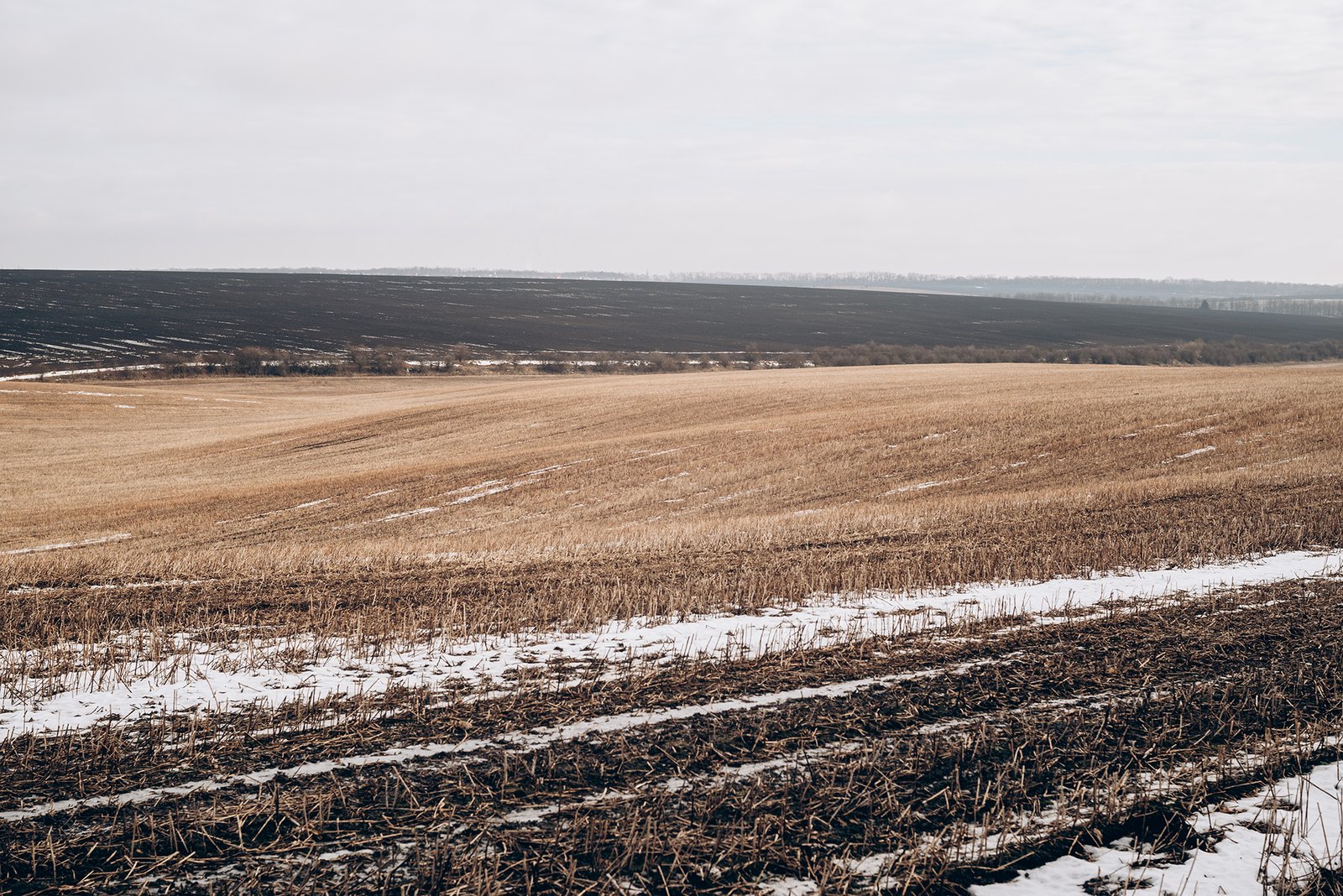
In the Mediterranean belt, most of the rain falls in autumn and winter. Harvest ends, irrigation stops, the soil on many fields is left bare, and the rains begin. For nutrient losses, this transition is often the riskiest period of the year. Field studies from Europe’s Mediterranean regions show that a few measures taken before winter can noticeably reduce both fertilizer losses and damage to soil structure.
Most of the loss happens in winter
In Apulia, southern Italy, a three-year trial followed vegetable crops irrigated with saline water, in greenhouses and in the open field (tomato–spinach, zucchini–broccoli, pepper–wheat). Nitrogen leached from the root zone averaged 156 kg per hectare per year, and about 72% of that loss occurred in the autumn–winter season. The authors attribute it to high rainfall combined with generous nitrogen fertilization. [1]
On a dairy farm in Sardinia, a three-year study of an irrigated forage system found that soil-solution nitrate peaked every year in autumn and winter. Estimated annual nitrogen losses ranged from roughly 42 kg per hectare under cattle manure to 110 kg under slurry, yet replacing organic nitrogen with mineral fertilizer did not reduce leaching. According to the authors, leaching in this season is hard to control through fertilizer management alone, because it is driven mainly by the natural water surplus and the low nitrogen uptake of the winter crop. [2]
In northeastern Portugal, soil nitrate measured in October, shortly after potato harvest, tracked the nitrogen dose applied the previous season. By late April those differences had disappeared, even on plots where no crop had been grown: the nitrogen left in the soil in autumn had been lost over winter through leaching and/or denitrification. [3]
The practical conclusion from all three studies is the same. Planning winter fertilization without knowing how much nitrogen is left in the field after harvest, and without a crop or cover to hold it once the rains start, is risky. Taking separate soil samples from 0–30 and 30–60 cm after harvest and having the nitrate measured gives you the most concrete data available for that decision.
Handle salt leaching and nitrogen separately in greenhouses
Growers who leach greenhouse soil to remove salt accumulated over the summer risk carrying nitrogen down with the same water. The Apulia study recommends separating the two jobs: leach right after the summer harvest or at the start of the autumn–winter season, before the second crop is planted. During the autumn–winter crop, then, apply a suitable amount of nitrogen and top-dress on time, so that rain can still flush out salts while nitrogen losses are kept down. [1]
Covering bare soil before the rains
A meta-analysis of 35 studies from Northern Europe found that non-legume cover crops, mostly grasses, cut nitrogen leaching by 50% on average and autumn soil nitrate by 35%. Italian ryegrass drew down soil nitrogen markedly more than the other ryegrass species. Main crop yield in spring cereals fell by about 3%. Legumes such as clover did not reduce the risk of leaching, although legumes and mixtures raised yield by 6%. [4]
A synthesis of 326 experiments from California and the Mediterranean showed a similar picture: in plots with non-legume cover crops, nitrate leaching was 53% lower and soil nitrogen 41% lower. Main crop yield was 16% higher with legume covers and 7% lower with non-legume covers. [5] The same study found 13% less water in the soil of cover-cropped plots, so in dry years and where irrigation is limited, the termination date of the cover crop matters.
The Portuguese trial offers a useful warning about timing. Triticale (a wheat–rye hybrid) was weak at capturing the previous crop’s residual nitrogen in early autumn, but by harvest it had taken up as much as 80 kg per hectare of the nitrogen that mineralizes toward the end of winter. In one year, rain delayed sowing until January, and the cold seriously weakened emergence. [3] In short, a cover crop should be sown just before or as the rains begin, not in the middle of winter.
Where sowing a cover is not possible, there are other options. According to the EU Joint Research Centre’s (JRC) review of 570 meta-analyses, leaving crop residues on the field cuts nitrogen leaching and runoff by 8–39% in arable crops, rice included, and residues such as straw raise the soil’s water retention by 10–14%. In tree crops, mulching reduces nitrogen loss through runoff by 39%. [6] In greenhouses with disease pressure, the decision to leave residues needs separate assessment.
Machinery and tillage on wet soil
Pre-winter fertilizer spreading, post-harvest hauling and deep tillage often get squeezed into the same few weeks. According to Alakukku’s review, subsoil compaction can occur whenever a heavy axle load is applied to moist soil, and its effects are long-lasting; the same stress compacts moist soil more than dry soil. [7] The PNAS study by Keller and Or likewise shows that surface stresses have stayed constant while subsoil stresses have grown, that compaction below tillage depth is hard to reverse, and that it can impair soil functions for years or even decades. [8]
The field rule is simple: squeeze a handful of soil. If it leaves a sticky clump or water seeps out, keep machinery off and wait a day or two. Cutting unnecessary tillage also pays off: in the JRC review, no-till raised soil water retention by 6–16% compared with conventional tillage. [6]
Going into winter: the order of work
First, measure nitrate at two depths after harvest. For greenhouse and vegetable land, plan the salt-leaching timetable. Then make the nitrogen decision based on those results. Where no crop will be sown, protect the soil with a cover or residues ahead of the rains, and keep machinery off until moisture is right. Which of these a given field needs depends on soil analysis and the crop plan, because the winter load is not the same on every parcel.
At Citsa, we support practices that not only feed the soil but also help it get through winter in good condition. If you would like to plan your soil conditioning and plant nutrition program together before winter, you are welcome to get in touch with our team.
References
1. Libutti, A. and Monteleone, M. (2017). Soil vs. groundwater: The quality dilemma. Managing nitrogen leaching and salinity control under irrigated agriculture in Mediterranean conditions. Agricultural Water Management, 186, 40-50. https://doi.org/10.1016/j.agwat.2017.02.019
2. Demurtas, C.E. et al. (2016). Replacing organic with mineral N fertilization does not reduce nitrate leaching in double crop forage systems under Mediterranean conditions. Agriculture, Ecosystems & Environment, 219, 83-92. https://doi.org/10.1016/j.agee.2015.12.010
3. Rodrigues, M.A., Coutinho, J. and Martins, F. (2002). Efficacy and limitations of Triticale as a nitrogen catch crop in a Mediterranean environment. European Journal of Agronomy, 17(3), 155-160. https://doi.org/10.1016/S1161-0301(02)00003-5
4. Valkama, E., Lemola, R., Känkänen, H. and Turtola, E. (2015). Meta-analysis of the effects of undersown catch crops on nitrogen leaching loss and grain yields in the Nordic countries. Agriculture, Ecosystems & Environment, 203, 93-101. https://doi.org/10.1016/j.agee.2015.01.023
5. Shackelford, G.E., Kelsey, R. and Dicks, L.V. (2019). Effects of cover crops on multiple ecosystem services: Ten meta-analyses of data from arable farmland in California and the Mediterranean. Land Use Policy, 88, 104204. https://doi.org/10.1016/j.landusepol.2019.104204
6. Bosco, S. et al. (2024). Scientific evidence on farming practices improving sustainable water management in agriculture. European Commission, Joint Research Centre, JRC137742. https://publications.jrc.ec.europa.eu/repository/bitstream/JRC137742/JRC137742_01.pdf
7. Alakukku, L. (1999). Subsoil compaction due to wheel traffic. Agricultural and Food Science in Finland, 8, 333-351. https://journal.fi/afs/article/download/5634/4833/13815
8. Keller, T. and Or, D. (2022). Farm vehicles approaching weights of sauropods exceed safe mechanical limits for soil functioning. PNAS, 119(21), e2117699119. https://doi.org/10.1073/pnas.2117699119
Citsa Tarım © 2026
copyright